
Table of Contents
Introduction
Buying a property is one of the biggest financial decisions most people make in their lives. Whether you’re purchasing a residential plot, a house, an apartment, or a commercial space, the investment often represents years of hard work and savings. While real estate remains one of the most reliable ways to build wealth, it is also a sector where buyers need to exercise caution.
Property fraud has become a growing concern across India. From fake property listings and forged documents to unauthorized projects and false ownership claims, scams can occur at various stages of the buying process. Many buyers become victims simply because they trust verbal promises, skip legal verification, or rush into a deal that appears too good to be true.
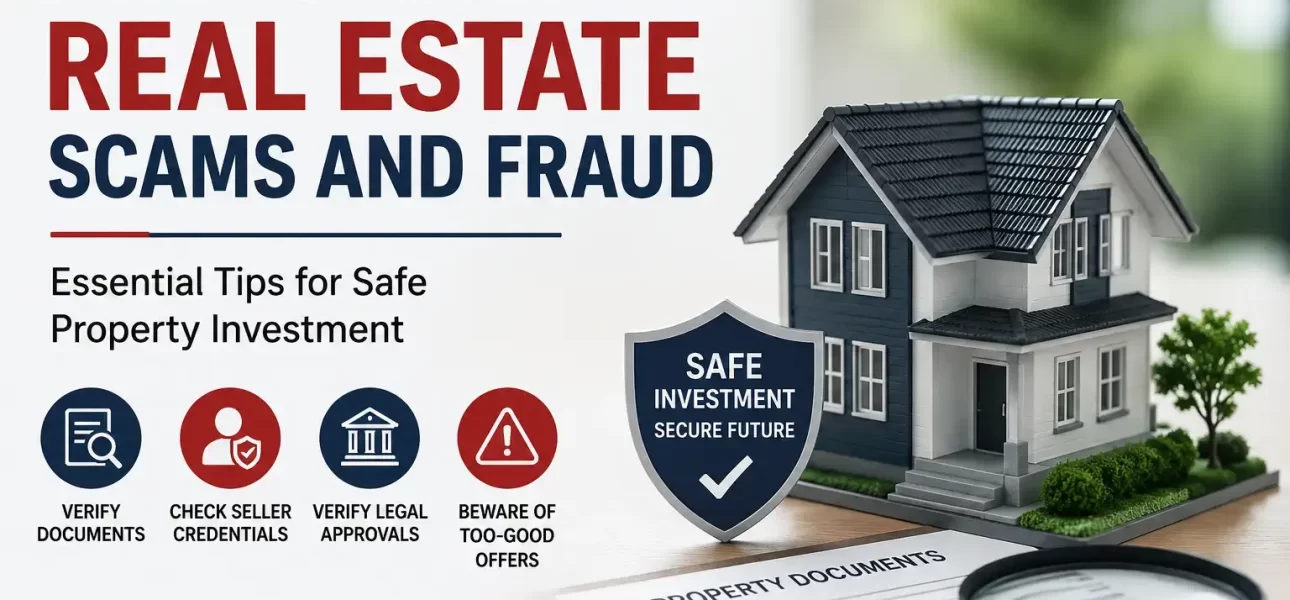
The good news is that most real estate scams can be avoided with proper research and due diligence. By understanding common fraud tactics and verifying important documents before making a purchase, buyers can protect their investment and make informed decisions. In this guide, we will discuss the most common real estate scams, how to avoid real estate scams and frauds in India.
Why Real Estate Fraud is a Growing Concern
India’s real estate sector has witnessed tremendous growth over the last decade. Rapid urban development, new infrastructure projects, expanding cities, and increasing demand for housing have created numerous investment opportunities. Areas around expressways, industrial corridors, airports, and upcoming townships are attracting significant buyer interest.
However, the rapid growth of the sector has also created opportunities for fraudsters. Many buyers, especially first-time investors, are not fully aware of the legal and technical aspects of property transactions. This lack of awareness makes them vulnerable to scams involving fake documents, unauthorized developments, and misleading promises.
The rise of online property portals and social media advertising has further increased the risk. While these platforms make property searches more convenient, they also allow fraudsters to create attractive listings and target unsuspecting buyers. This is why property verification has become more important than ever before. A few extra days spent checking documents and approvals can save buyers from years of legal and financial trouble.
Common Real Estate Scams Every Buyer Should Know
Fake Property Listings
Fake property listings are among the most common scams in today’s digital world. Fraudsters create advertisements for plots, apartments, or homes at prices that appear significantly lower than the market rate. These listings are often accompanied by attractive photographs and compelling descriptions designed to generate immediate interest.
Once a buyer contacts the advertiser, they are usually told that the property is in high demand and that a booking amount is required to secure it. In many cases, buyers transfer money without physically visiting the site or verifying ownership. After receiving the payment, the scammer either disappears or continues to make excuses while demanding additional funds.
To avoid such scams, never transfer money based solely on online advertisements. Always visit the property, verify ownership details, and conduct proper due diligence before making any financial commitment.
Fake Ownership Claims
In this type of fraud, individuals attempt to sell properties they do not legally own. They may use forged identity documents, fake title deeds, or fabricated ownership records to convince buyers that they have the right to sell the property.
This scam is particularly common in the case of vacant plots, inherited properties, or land owned by individuals living in other cities. Buyers often discover the fraud only after trying to register the property or take possession.
Before purchasing any property, verify the ownership history, check the title deed, and ensure that the seller’s identity matches official records. Consulting a property lawyer can help identify potential issues before the transaction is completed.
Unauthorized Projects and Illegal Layouts
Many buyers are attracted to low-priced plots in developing areas without realizing that the project lacks the necessary approvals. Some developers launch projects without obtaining permissions from local authorities or without securing proper land-use clearances.
While such projects may appear attractive due to their pricing, they can create serious problems in the future. Construction approvals may be denied, legal disputes may arise, or authorities may take action against unauthorized developments.
Before investing in a plotted development or township, always verify the project’s approvals, layout plans, and regulatory status. Investing in a legally approved project significantly reduces risk.
Forged Property Documents
Property documents are the foundation of any real estate transaction. Unfortunately, forged documents continue to be a common tool used by fraudsters. Fake sale deeds, title deeds, tax receipts, and approval certificates can appear genuine to an untrained eye.
Buyers who fail to verify these documents often face difficulties during registration, construction, or future resale. In some cases, they may discover that the property is under dispute or that the seller never had legal ownership.
All important documents should be independently verified through relevant government authorities or legal professionals. Never rely solely on photocopies or scanned documents provided by the seller.
Multiple Sales of the Same Property
Another common scam involves selling the same property to multiple buyers. A fraudster may collect advance payments from several individuals for the same plot or property before disappearing.
This type of fraud is more common when buyers fail to register the property promptly or do not conduct proper ownership verification. By the time the issue is discovered, multiple parties may be claiming rights over the same property.
Conducting an encumbrance check and completing registration promptly can help prevent such situations.
How to Verify Property Documents Before Buying
Verifying property documents is one of the most important steps in any real estate transaction. Proper document verification can help you identify ownership issues, legal disputes, and other risks before investing your money.
Title Deed
The title deed establishes ownership of the property and confirms the seller’s legal right to transfer it. Buyers should carefully examine the title deed and ensure that the ownership history is clear and free from disputes.
Sale Deed
A sale deed is the primary document that legally transfers ownership from the seller to the buyer. It should be properly executed and registered with the relevant authority.
Encumbrance Certificate
This document confirms whether the property has any outstanding loans, mortgages, or legal liabilities. An encumbrance certificate helps buyers ensure that the property is free from financial obligations.
Property Tax Receipts
Property tax receipts indicate whether taxes have been paid regularly. Unpaid taxes can create complications for future owners, so buyers should review recent tax records.
Approved Layout Plan
When purchasing a plot in a township or residential development, it is important to verify that the layout has been approved by the relevant authority. Approved layouts reduce the risk of future legal issues.
Mutation Records
Mutation records show that ownership has been updated in government records following a sale or inheritance. These records help verify the legitimacy of ownership claims.
7 Essential Tips to Avoid Real Estate Fraud
1. Verify Ownership Records
Always confirm that the seller is the legal owner of the property. Review ownership documents, verify identity records, and examine the property’s ownership history before proceeding.
2. Check RERA Registration
If you are investing in a real estate project, verify whether it is registered under the Real Estate (Regulation and Development) Act. RERA registration promotes transparency and helps protect buyers’ interests.
3. Visit the Property Personally
Never rely solely on photographs, brochures, or online listings. A site visit allows you to assess the property’s condition, surroundings, accessibility, and overall suitability.
4. Avoid Cash Transactions
Use banking channels for all payments and maintain proper records of every transaction. Transparent payment methods provide legal evidence in case of disputes.
5. Work with Reputed Developers
Choosing a trusted developer with a proven track record can significantly reduce risk. Research completed projects, customer reviews, and market reputation before making a decision.
6. Hire a Property Lawyer
A qualified property lawyer can verify documents, identify legal issues, and guide you through the transaction process. The cost of legal verification is often negligible compared to the potential losses caused by fraud.
7. Don’t Rush Your Decision
Fraudsters often create a sense of urgency to prevent buyers from conducting proper checks. Take your time, review all documents, and make decisions based on facts rather than pressure.
Common Mistakes Property Buyers Make
Many property buyers unintentionally increase their risk by making avoidable mistakes. One of the most common errors is trusting verbal promises made by brokers or sellers. If a commitment is important, it should be documented in writing.
Another mistake is skipping legal verification to save time or money. Buyers sometimes assume that because a project appears attractive or popular, all approvals must already be in place. This assumption can lead to serious complications later.
Many investors also focus exclusively on price while ignoring legal aspects. A low-priced property may seem like a bargain, but hidden legal issues can make it far more expensive in the long run. Thorough verification should always take priority over short-term savings.
Conclusion
Real estate can be an excellent investment, but only when approached with caution and proper planning. Property scams and fraud can result in significant financial losses, legal complications, and years of unnecessary stress. Fortunately, most of these risks can be avoided through careful research, document verification, and professional guidance.
Before purchasing any property, take the time to verify ownership records, review approvals, check legal documents, and conduct a site visit. Avoid making decisions based solely on attractive pricing or verbal assurances. A safe property investment is not just about finding the right location, it is about ensuring that the property is legally secure and free from future complications.
By following the precautions outlined in this guide, buyers can confidently navigate the real estate market and make informed investment decisions that protect their hard-earned money.