
Table of Contents
Buying a property is rarely an impulse decision. Whether you are looking at plots in Lucknow, planning to purchase a home, or considering a larger real estate investment, you are putting a significant amount of money into an asset that may shape your financial future for years.
And that is exactly why trust matters in real estate.
A recent discussion involving Delhi RERA Member Devesh Singh has brought this issue into focus, highlighting an important idea for India’s growing property market: regulation should not simply create more rules. It should create greater trust among buyers, developers and investors.
For property buyers in Lucknow, this is particularly relevant. With the city’s rapid expansion, new residential developments, plotted projects and infrastructure corridors, knowing how to evaluate a property has become just as important as finding the right location.
RERA Is Changing the Way Buyers Look at Property
The introduction of the Real Estate (Regulation and Development) Act, 2016, commonly known as RERA, brought a more structured regulatory framework to India’s real estate sector.
Before investing, buyers often had to depend heavily on information provided by sales teams, advertisements or developers. RERA has strengthened the importance of documented project information, disclosures and accountability.
The larger objective is simple: buyers should have greater clarity before committing their money.
This becomes particularly important when purchasing property because the difference between a well-documented project and one with unresolved issues can have significant financial consequences.
For someone searching for plots in Lucknow, therefore, the question should not only be:
“What is the price per square foot?”
It should also be:
“What do I know about the project, the developer and its regulatory status?”
Why RERA Matters When Buying Plots in Lucknow
Lucknow’s real estate market has expanded considerably as the city grows towards emerging residential and infrastructure corridors.
As demand for residential land increases, more buyers are exploring plots in Lucknow as an alternative to ready-built properties.
Plots can offer flexibility because buyers can eventually develop a property according to their requirements. But the flexibility of plotted property investment also makes due diligence extremely important.
Before purchasing a plot, buyers should look beyond location and price and examine factors such as:
- Project registration, wherever RERA registration is applicable
- Ownership and title documentation
- Approved layout plans
- Applicable permissions and approvals
- Development and infrastructure commitments
- Sale agreement and payment terms
- Developer’s track record
- Expected project timelines
- Information available with the relevant authority
In other words, a good location is only one part of a good property investment.
What RERA Means for Builders in Lucknow
RERA is not only about protecting buyers.
It also creates a more structured environment for genuine and compliant developers.
For builders in Lucknow, transparency and regulatory compliance can become important elements of credibility. Developers that provide accurate information, maintain proper documentation and meet their commitments can build stronger relationships with buyers and investors.
This can ultimately benefit the entire market.
When responsible developers are able to establish credibility, buyers become more confident about investing, financial institutions can assess projects more effectively and the overall real estate ecosystem becomes more organised.
For the builders of Lucknow, therefore, regulation should not necessarily be viewed simply as a compliance burden. It can also be an opportunity to demonstrate reliability in an increasingly competitive market.
The Importance of Transparency in Real Estate
One of the most important changes brought by RERA is the greater emphasis on project disclosures.
Information regarding the promoter, project plans, approvals and other relevant details can help buyers make decisions based on documented facts rather than assumptions.
This is especially valuable in a market where property advertisements can sometimes focus heavily on amenities, future development and expected appreciation.
A smart buyer should separate marketing claims from verifiable information.
This is true whether you are purchasing an apartment, commercial property or plots in Lucknow.
What About the Money You Pay?
Financial discipline is another important aspect of RERA.
The regulatory framework includes provisions concerning the use of funds collected from buyers. One of the key requirements is that 70% of the amounts realised for a project from allottees must be deposited in a separate account and used towards the cost of land and construction, subject to the provisions of the Act.
The purpose is to bring greater financial discipline to project execution and reduce the possibility of funds being diverted away from the project.
For buyers, this can provide an additional layer of confidence when evaluating RERA registered projects.
RERA Also Places Limits on Advance Payments
Another important protection for property buyers concerns advance payments.
Under RERA, a promoter cannot accept more than 10% of the cost of an apartment, plot or building as an advance or application fee without first entering into a written agreement for sale.
This is important because the agreement establishes the contractual relationship between the buyer and developer and sets out important terms concerning the transaction.
For anyone considering property investment, understanding the agreement before making substantial payments should be a basic part of the buying process.
What Should a Lucknow Property Buyer Check Before Investing?
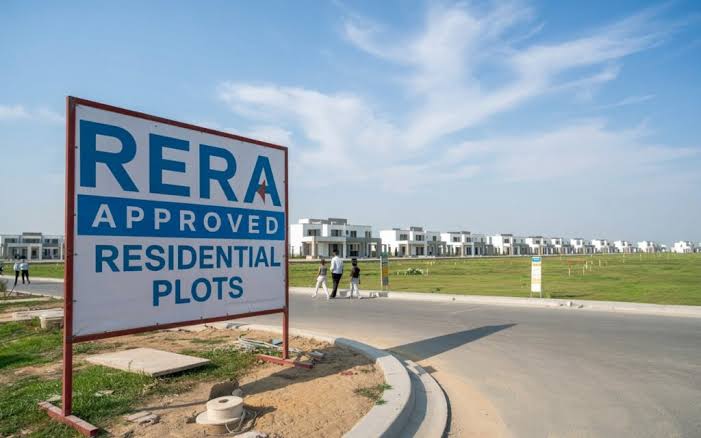
Whether you are looking for plots in Lucknow, residential property or a project from one of the city’s many developers, due diligence should come before the payment.
Here is a practical checklist.
1. Check the RERA Status
If the project falls within the scope of RERA registration, verify its registration details with the relevant authority.
2. Research the Developer
Don’t evaluate a project only on its brochure.
Look at the developer’s previous projects, reputation, delivery record and transparency.
This is particularly important when comparing different builders in Lucknow.
3. Verify the Land and Project Documents
For plotted developments, documentation concerning land ownership, title and the approved layout is particularly important.
4. Understand What You Are Actually Buying
Clarify the plot size, location within the development, development commitments, applicable charges and other terms before signing.
5. Read the Agreement Carefully
Do not treat the agreement as a formality. Understand payment schedules, possession or development timelines, cancellation provisions and other contractual terms.
6. Don’t Choose Property Only on Price
A lower price does not automatically mean a better investment.
Location, infrastructure, documentation, developer credibility and long-term development potential should all form part of the decision.
Why This Matters for Lucknow’s Growing Real Estate Market
Lucknow is evolving rapidly.
Expansion of residential neighbourhoods, infrastructure development and growing demand for land are creating new opportunities for property buyers and investors.
This growth can make real estate investment in Lucknow attractive, but it also makes informed decision-making increasingly important.
As more projects enter the market, buyers will have more choices. That means developers will need to compete not only on price and amenities but also on trust, transparency and execution.
The future of the city’s real estate market will ultimately depend on both sides of the equation: informed buyers and responsible developers.
Regulation Should Build Trust, Not Just Rules
The larger message emerging from the recent RERA discussion is worth remembering.
Real estate regulation works best when it creates confidence.
Buyers want to know where their money is going. Developers need a predictable and transparent regulatory environment. Investors need greater visibility into potential risks. Financial institutions need reliable project information.
A well-functioning regulatory framework can help bring these interests closer together.
For people exploring plots in Lucknow or considering their next property investment, this means one thing: don’t let a compelling price or attractive brochure make the decision for you.
Check the project. Check the documents. Check the developer. Check the regulatory status. Then make your decision.
Because in real estate, the best investment is not necessarily the property that looks the most attractive on paper. It is the one you understand well enough to invest in with confidence.
Disclaimer: This article is intended for general informational purposes and is based on publicly reported industry discussions and provisions of RERA. It should not be considered legal, financial or investment advice. Buyers should independently verify project documents and seek professional advice where required.